
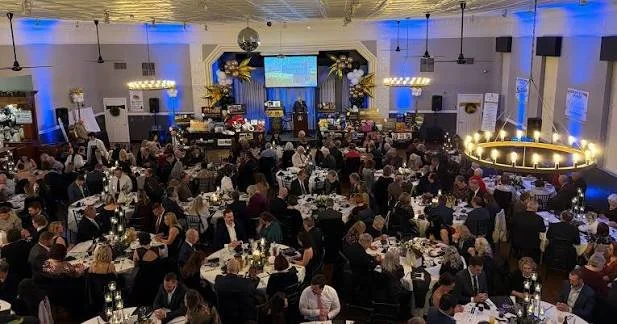
Here's a pattern I see constantly: a nonprofit books their auctioneer, then doesn't think about them again until the week of the event.
That's backwards — and it's the single biggest reason galas leave money on the table. The events that raise the most don't just hire someone with a great stage presence. They hand that person the right information early enough to actually build a revenue strategy around it. That's the real difference between a fun night and a record-breaking one.
If you want to get the most out of your auctioneer — whether it's me or anyone else — here's exactly what to hand over, and why each piece matters.
☐ 1. Your Real Revenue Goal — Not Just a Ticket Sales Number
I need the full picture: ticket revenue, sponsorships, live auction, paddle raise, and what "success" looks like in total dollars. Without this, I'm guessing at how hard to push and where. With it, I can build a plan that's actually engineered to hit your number.
☐ 2. Your Donor Mix
Who's actually in the room? Longtime major donors, first-timers, a heavy corporate sponsor table, a young professionals' group? Each of these groups bids differently. Tell me the mix, and I'll tailor the pacing and tone instead of running a generic script that treats every room the same.
☐ 3. Your Cause, in Specifics
Not the elevator pitch — the real story. A specific family, a specific outcome, a specific number that shows impact. Generic mission statements don't move a room. Specific stories do. Give me time to learn yours the way I've learned dozens of others, and I'll tell it from stage like it's mine.
☐ 4. Your Auction Items — Early, Not the Week Before
Send me your working list as soon as you have one, even a rough draft. Item order and pacing decisions depend on knowing what we're working with. Hand me a finalized list three days out, and I'm reacting instead of strategizing — and that's exactly the gap between an auctioneer who performs and one who's actually maximizing your revenue.
☐ 5. Your Run of Show Draft
Where does the live auction sit relative to dinner, speeches, and awards? Where does the paddle raise land? I'll help shape the final version — that's part of what you're paying for — but I need your first draft to start from, including any fixed elements I can't move.
☐ 6. Who the Room Listens To
Board chair, honoree, a beloved longtime volunteer — tell me who commands respect in that room. I'll use that to decide who should be introducing what, and when a moment needs a familiar voice instead of mine.
☐ 7. Any Land Mines
Sensitive topics, a difficult past event, a donor relationship that needs careful handling — tell me before I'm on stage, not after. Nothing kills a room faster than an avoidable misstep, and it's the easiest thing on this list to prevent.
Why this matters
Every item here takes you a short time to gather. But together, they're the difference between an auctioneer showing up to perform and a strategist showing up to execute a plan built specifically for your donors, your cause, and your goal. The 20 minutes on stage are the visible part. This is the invisible part that decides whether those 20 minutes actually work.
This is exactly the process I run with every client, starting 60 to 90 days before the event — and it's a big part of why I've helped raise millions across organizations like the American Cancer Society, United Way, and Feed the Children. If your gala is on the calendar, the best thing you can do today isn't finalize your seating chart. It's start this conversation.
P.S. — Every client I've helped raise six figures in a single night started this process at least two months out. If your event is on the calendar and you haven't had this conversation yet, now's the time — just reply and tell me your date.