
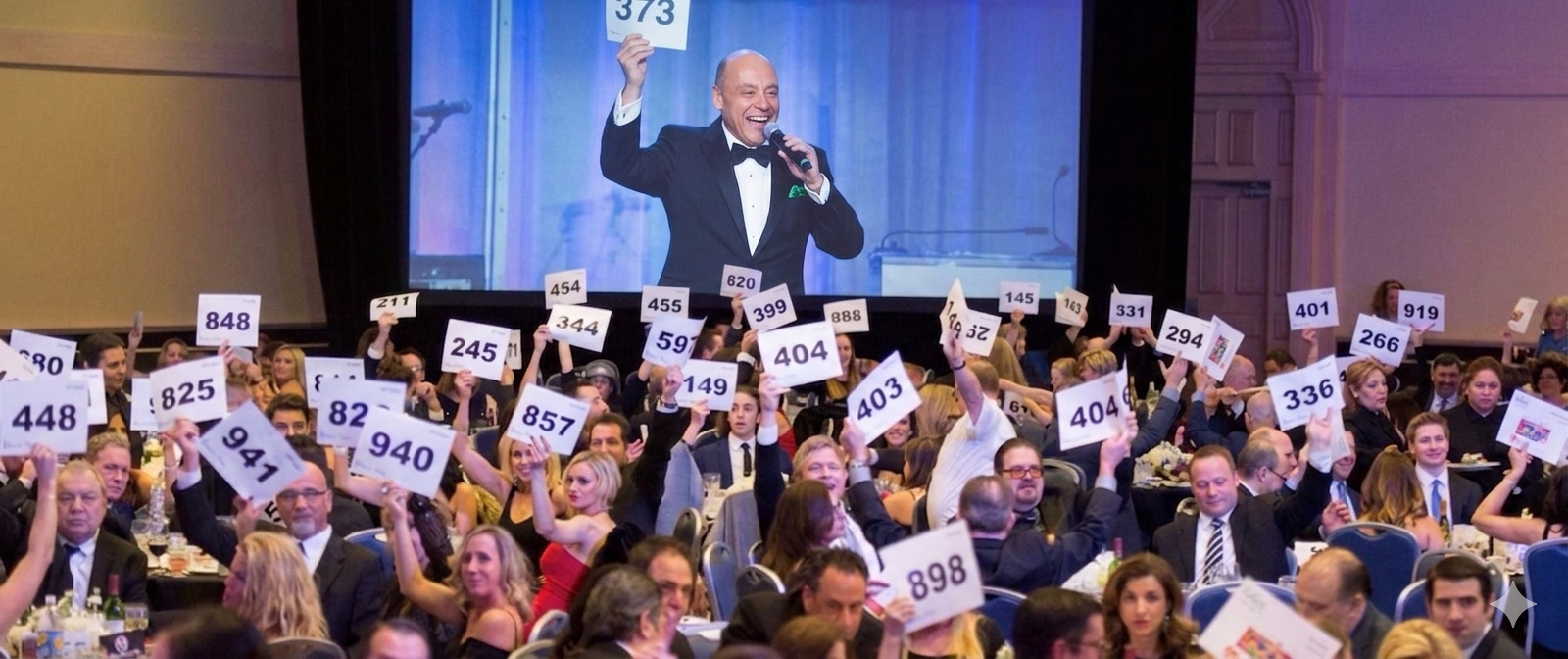
After raising millions of dollars at charity auctions, I can tell you this: a successful paddle raise is not random, and it’s definitely not just about “asking for donations.”
It’s structured. It’s intentional. And when it’s done right, it becomes the most powerful fundraising moment of the night.
Here’s exactly how I build it.
1. I Start With the Right Top Number
Before I ever step on stage, I work with my clients to choose the right starting point.
Too high, and the room shuts down.
Too low, and you leave money on the table.
We’re looking for that stretch number—the one that makes people sit up and think, “That’s meaningful.” But it still has to be realistic for the room.
And just as important: I always know who might take that first bid. A paddle raise should never feel like a gamble.
2. I Lock in Leadership Giving Early
Momentum starts at the top.
If I can secure 1–3 strong commitments at the highest level before or right as we begin, everything changes. The room sees leadership. They see confidence. They see that giving at that level is possible.
Without that? You’re pushing uphill.
With it? The room follows.
3. I Control the Pace—Not Too Fast, Not Too Slow
This is where experience really matters.
If I move too quickly, I lose people.
If I drag it out, I lose energy.
I’m constantly reading the room—watching body language, eye contact, hesitation. Sometimes I pause just long enough to let someone make a decision. Other times, I keep it moving to maintain momentum.
There’s a rhythm to a great paddle raise. When it’s right, you can feel it.
4. I Make Every Level Feel Important
One of the biggest mistakes I see is treating lower giving levels like an afterthought.
That’s a miss.
Every level matters, and I make sure the room feels that. Whether someone is giving at the top or at an entry level, they should feel recognized and appreciated.
Because a strong paddle raise isn’t just about a few big gifts—it’s about broad participation.
5. I Use Language That Invites, Not Pressures
The way you ask matters.
I’m not commanding people to give. I’m inviting them into something meaningful.
Instead of making it transactional, I connect each level back to impact—what it actually does, who it helps, why it matters.
When people understand the “why,” the “yes” comes much more easily.
6. I Watch for the Moment to Pivot
Sometimes the room tells you it’s ready to move on. Sometimes it tells you there’s more to give.
Knowing the difference is everything.
I might extend a level slightly if I feel there’s one more gift in the room. Or I might move quickly to keep the energy strong.
There’s no script for this part—it’s instinct, built over years.
7. I Finish Strong and With Purpose
The final levels are just as important as the opening ones.
This is where you bring everyone in. This is where you build that collective energy—where the entire room feels like they’ve been part of something bigger.
And I always close with clarity and gratitude. People should feel great about what they just did.
A paddle raise isn’t just a fundraising segment. It’s a carefully structured moment that, when done right, can drive a significant portion of your total revenue.
It’s strategy. It’s psychology. It’s timing.
And when all of those pieces come together, it’s one of the most powerful moments you’ll ever experience in a room.